Yes, stainless can rust, under chlorides (salt), in oxygen-starved crevices, when paired with the wrong metals, or when contaminated by carbon-steel particles. None of these mean the steel was fake; they mean conditions beat the passive layer.
The name is a half-truth
Stainless resists rust far better than ordinary steel, but it is not immune. Its protection is a thin chromium-oxide layer that needs oxygen to heal. Take away oxygen or attack it with chlorides, and rust can start.
The four real causes
- Chlorides: salt and pool chemicals cause pitting and tea staining, the most common cause on outdoor hardware.
- Crevices: trapped, oxygen-starved moisture under washers or in joints.
- Galvanic pairing: stainless touching carbon steel or aluminum in wet conditions.
- Contamination: embedded iron from steel wool, grinding dust, or carbon-steel tools.
How to keep yours from rusting
Buy the right grade (316 near salt), use matching fasteners, keep hardware clean and rinsed in coastal areas, and never clean it with steel wool. Do that and stainless hinges will outlast almost everything else on the door.
How stainless resists rust
Stainless isn't rust-proof by chemistry alone, it's self-protecting. Chromium in the alloy reacts with oxygen to form an invisible chromium-oxide skin, the passive layer, that reseals itself when scratched. As long as that layer can breathe, the steel underneath stays protected.
When stainless does corrode
Trouble comes when something overwhelms or contaminates that layer:
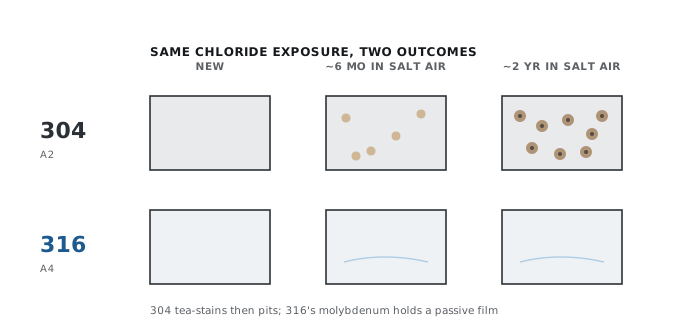
- Chlorides. Salt air, saltwater, and pool chemicals attack the passive film and cause pitting. This is why 304 fails near the coast and 316, with added molybdenum, holds up.
- Crevice corrosion. Salt and moisture trapped in a tight gap, under a washer, in an unsealed bolt hole, corrode even good stainless.
- Tea-staining. A cosmetic brown film in marine air; ugly but not structural, and it wipes off.
- Contamination. Carbon-steel particles from a grinder, wire brush, or nearby rusting screws embed and bloom into surface rust that looks like the stainless itself is failing.
Prevent it, and fix surface rust
Match the grade to the exposure, use matching stainless fasteners, rinse salt off periodically, and keep carbon-steel tools away from stainless surfaces. Light surface rust or tea-staining comes off with a nylon pad and a stainless cleaner or a mild acid like white vinegar, never a steel wire brush, which re-contaminates the surface.
Frequently asked questions
My stainless rusted, was it counterfeit?
Usually not. Far more often it is the right metal in the wrong conditions: 304 near salt, mismatched fasteners, or carbon-steel contamination.
Does surface rust on stainless spread like on regular steel?
Often it is just surface staining that wipes off and doesn't eat through the part the way carbon-steel rust does. Address the cause and it usually stops.