Key idea: stainless steel is protected by a thin "passive" chromium-oxide layer. Corrosion happens when something breaks that layer faster than it can heal, usually chlorides, trapped moisture, dissimilar metals, or embedded iron.
The passive layer, briefly
Chromium in the steel forms a microscopic, self-healing oxide film. As long as oxygen can reach the surface, that film repairs itself. Corrosion is what happens when that repair is overwhelmed locally.
1. Pitting corrosion
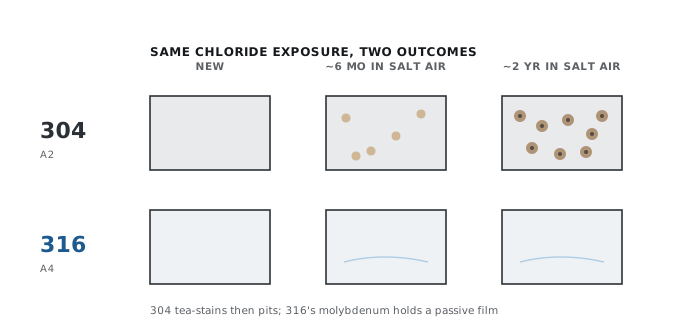
Chlorides (salt, pool chemicals) punch through the passive layer at tiny points, creating pits. This is the classic coastal failure and the reason 316's molybdenum matters.
2. Crevice corrosion
In tight gaps, under washers, in joints, beneath debris, oxygen gets starved and the passive layer can't heal. Salt concentrates there and corrosion sets in. Prevention: avoid trapping moisture and debris, and don't leave crevices in wet, salty spots.
3. Galvanic corrosion
When two different metals touch in the presence of moisture, the less-noble metal corrodes faster. Stainless paired with carbon steel or aluminum in damp conditions is a common offender. Prevention: matching fasteners, or isolate the metals.
4. Contamination ("rouging")
Free iron from carbon-steel tools, steel wool, or grinding dust embeds in the surface and rusts, staining the stainless. Prevention: keep stainless away from carbon-steel tooling and abrasives.
The passive layer, briefly
Every corrosion question about stainless comes back to one thing: the chromium-oxide passive layer. It forms on its own, reseals when scratched, and fails only when chlorides, trapped moisture, or contamination get the upper hand. Grade selection is really about how robust you need that layer to be.
The forms of corrosion that matter
- Pitting, localized chloride attack that drills tiny holes; the classic 304-near-salt failure.
- Crevice corrosion, the same attack concentrated in a tight, oxygen-starved gap under fasteners or seals.
- Galvanic corrosion, when stainless is bolted to a less-noble metal (like a carbon-steel screw) in a wet environment, the lesser metal corrodes fast.
- General/tea-staining, broad cosmetic discoloration in marine air, more appearance than structure.
Preventing all four
The playbook is short and it's the same one the marine trade uses: choose 316 wherever chlorides are present, match fastener grade to the hardware, seal or isolate crevices, avoid contact with carbon steel, and rinse salt off before it concentrates. Do that and stainless hardware outlives everything around it.
Frequently asked questions
Which corrosion type is most common on hinges?
Pitting and tea staining from chlorides near the coast, followed by galvanic issues from mismatched fasteners.
Does higher grade fix all of these?
316 greatly reduces pitting and crevice corrosion. Galvanic and contamination corrosion are about installation and handling, not grade.