What to look for
Grade for the environment
304 for indoor and inland; 316 for coastal, marine, pool, or chemical exposure. This decision comes before anything else.
Correct size
Match hinge height to door thickness and width, usually 4.5″ for a standard 1-3/4″ door. Round up if between sizes.
Bearing type
Plain-bearing for light interior doors; ball-bearing for heavy, solid-core, or high-traffic doors.
Pin and corners
Non-removable pins for exterior out-swing security; match corner radius (square or 5/8″) when replacing.
Pick by the three things that matter
| Decision | Options | Rule of thumb |
|---|---|---|
| Grade | 304 vs 316 | 316 within ~5 mi of salt or chlorine, else 304. |
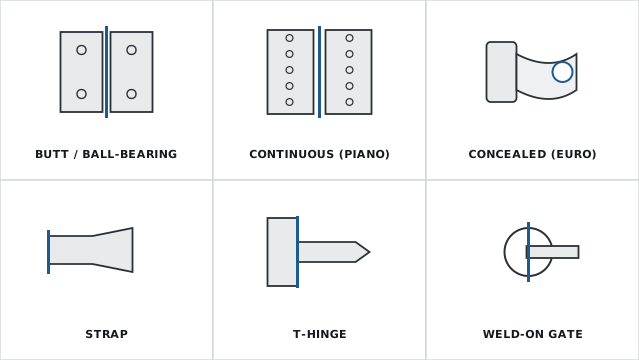
| Type | Butt / ball-bearing, continuous, concealed, strap | Match to the door and load. |
| Load | Hinge count + bearing | Add a hinge for heavy or tall; ball-bearing for weight. |
Our picks by use case
TOGU 304 Stainless Ball-Bearing Door Hinge, 4.5″ (3-pack)
A true 304 stainless ball-bearing hinge in a satin-nickel finish, the right default for most interior and inland exterior doors. The 3-pack covers one standard door. Match the size and corner radius to your existing hinges before buying.
Check price on Amazon →Affiliate link, we may earn a commission at no cost to you.Hinge Outlet 316 Marine-Grade Stainless Door Hinge, NRP (3-pack)
Genuine 316 marine-grade stainless with a non-removable pin for outswing security. This is the grade to use within ~5 miles of salt water or anywhere chlorides are present. Pair with 316 screws to avoid galvanic corrosion.
Check price on Amazon →Affiliate link, we may earn a commission at no cost to you.Hommyzone 304 Stainless Ball-Bearing Hinge, 4.5″ x 4″ (2-pack)
A budget-friendly 304 stainless ball-bearing hinge for lighter interior doors where marine grade would be overkill. Full corrosion resistance at a lower per-hinge cost.
Check price on Amazon →Affiliate link, we may earn a commission at no cost to you.Common mistakes to avoid
- Choosing on price, not environment (304 where 316 belonged).
- Too few hinges for the door's weight.
- Non-NRP hinges on out-swing exterior doors.
- Carbon-steel screws with stainless hinges.
Frequently asked questions
304 or 316?
304 for dry and inland; 316 within a few miles of salt water, near pools, or in de-icing-salt zones. When exposure is borderline, 316 is cheap insurance.
How many hinges do I need?
Two up to 60", three to 90", four to 120", then add one for heavy solid-core or oversized doors.
Are all stainless hinges rustproof?
No, they're rust-resistant, and only if the grade matches the environment. 304 near salt will still stain. Buy 316 for coastal jobs.
How do I know the grade?
It should be stated in the listing or stamped on the hinge. If a seller won't confirm 304 vs 316, treat the grade as unknown.