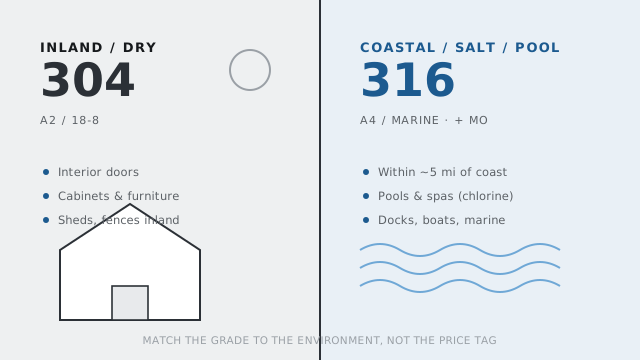
In short: 316 is 304's tougher sibling. It adds 2–3% molybdenum, which makes it far more resistant to pitting and corrosion from salt and chlorides. That single addition is why it is the standard for marine, coastal, and pool hardware.
The molybdenum difference
316 starts from the same austenitic base as 304 but adds molybdenum and usually a bit more nickel. Molybdenum specifically defends the passive layer against chloride ions, the part of saltwater that attacks ordinary stainless. The result is dramatically better resistance to pitting and crevice corrosion, the two failure modes that ruin hardware near the ocean.
Why it's called "marine grade"
Boat builders, dock hardware makers, and coastal architects standardized on 316 because it survives constant salt exposure where 304 cannot. You will also see it specified as A4 in the metric fastener system, versus A2 for 304.
When to spend on 316 hinges
- Boats, docks, and anything over or near water
- Homes and buildings within ~5 miles of saltwater
- Pool and spa gates and enclosures (chlorine is a chloride)
- Wash-down, food-processing, and chemical environments
Away from salt and chemicals, 316 is overkill, 304 will perform identically for less money.
Frequently asked questions
Is 316 worth the extra cost?
Near salt or chlorine, absolutely, it is the difference between hardware that lasts and hardware that pits within a season. Inland and indoors, the premium buys you nothing 304 doesn't already deliver.
What is the difference between 316 and 316L?
316L has lower carbon, which prevents corrosion at welds. For standard screw-in or bolt-on hinges that aren't welded, regular 316 is all you need.