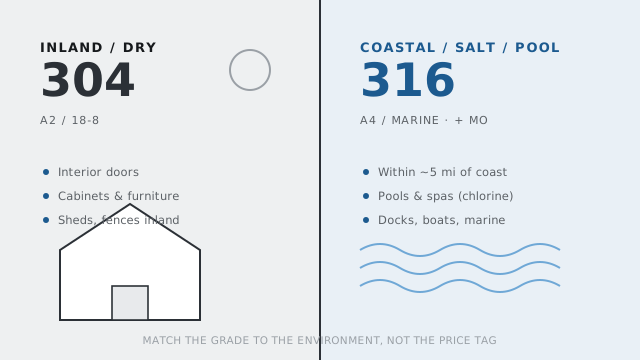
Use stainless screws that match the hinge's grade, 304 screws with 304 hinges, 316 with 316. Mixing in carbon-steel or zinc screws is the single most common way a good stainless hinge ends up streaked with rust, because the mismatched fastener corrodes first and can set up galvanic corrosion.
Match the grade
The fastener should be at least as corrosion-resistant as the hinge. Put carbon-steel or zinc-plated screws in a stainless hinge and, outdoors, the screws rust, bleed stains down the door, and loosen. Near salt, pair 316 hinges with 316 screws; inland, 304 screws with 304 hinges. This one detail decides whether the install still looks good in a year.
Why mixed metals fail
When two dissimilar metals touch in a wet environment, the less-noble one corrodes faster, galvanic corrosion. A carbon-steel screw against stainless is exactly that pairing, and moisture in the joint accelerates it. Matching the metals removes the couple and the problem.
Length and fit
- Length: standard hinge screws are short; on the load-bearing top hinge of a heavy door, swap in 2.5–3″ stainless screws that reach the wall stud.
- Head: use flat/countersunk heads that seat flush in the hinge's countersunk holes.
- Pilot holes: stainless screws can gall or snap in hardwood, drill a pilot and, if needed, a little wax on the threads.
- Gauge: match the screw diameter to the hinge's holes so heads seat properly.
Frequently asked questions
Can I use regular screws with stainless hinges?
Not outdoors or anywhere damp. Carbon-steel or zinc screws rust, stain the door, and can cause galvanic corrosion against the stainless. Use matching stainless screws, 304 or 316 to match the hinge.
Do stainless screws strip or break easily?
Stainless is softer than hardened steel and can gall or snap in dense hardwood. Drill a pilot hole, don't overdrive, and a touch of wax on the threads helps, then they hold beautifully.