For light surface rust or tea-staining on stainless, a nylon pad with a stainless cleaner or white vinegar usually restores it. For rusted steel hinges, clean, treat, and protect, or replace with stainless. The one rule: never use a steel wire brush on stainless, which re-contaminates the surface.
First, identify what you're dealing with
On stainless, brown discoloration is usually tea-staining or surface contamination (often from nearby carbon steel), not the hinge itself failing. On plated or bare steel, it's true rust eating the metal. The two need different approaches.
Removing surface rust and tea-staining from stainless
- Wipe with a stainless cleaner or a 1:1 white vinegar solution and a soft cloth.
- For stubborn spots, use a non-metallic (nylon) pad, never steel wool or a wire brush, which embeds iron particles that rust.
- Rinse with fresh water and dry. For persistent staining, a stainless passivation product restores the protective layer.
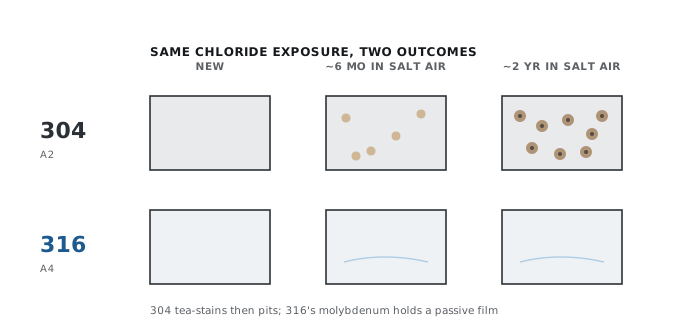
- If it keeps returning, the grade is likely wrong for the environment, consider 316 near salt.
Rusted steel hinges
- Remove the hinge if you can. Knock off loose rust with a nylon pad or, for steel only, a wire brush.
- Treat pitting with a rust converter, then prime and paint, or apply a protective oil.
- Badly pitted or seized hinges aren't worth saving, replace them, ideally with stainless.
Keeping rust from coming back
Match the grade to the environment, use matching stainless fasteners (mixed metals cause rust streaks and galvanic corrosion), keep carbon-steel tools away from stainless, and rinse coastal hardware periodically. Prevention is far easier than removal.
Frequently asked questions
Why is my stainless hinge rusting?
Usually it's surface contamination from carbon steel (a nearby rusting screw, or grinding dust), tea-staining in salt air, or the wrong grade for the environment. True structural rust on correctly chosen stainless is rare.
Can I use steel wool on a stainless hinge?
No. Steel wool and wire brushes leave iron particles embedded in the surface that then rust and look like the stainless is failing. Use a nylon pad and a stainless-safe cleaner instead.