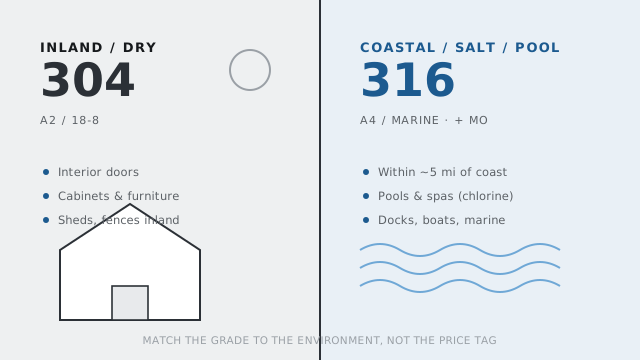
Rule one: 316 stainless, matching 316 fasteners, and an occasional freshwater rinse. That combination is what survives marine duty.
What to look for
316 everywhere
Hatches, lockers, seats, dock gates, all 316. 304 will pit in a season near salt.
Mounting to the substrate
Through-bolt into backing plates on fiberglass; weld-on or bolt-on for metal. Avoid trapping water in crevices.
Fastener match
316 screws and bolts only, to prevent galvanic corrosion.
Maintenance habit
Rinse with fresh water periodically; it prevents most tea staining even on 316.
Where to start shopping
Hinge Outlet 316 Marine-Grade Stainless Door Hinge, NRP (3-pack)
Genuine 316 marine-grade stainless with a non-removable pin for outswing security. This is the grade to use within ~5 miles of salt water or anywhere chlorides are present. Pair with 316 screws to avoid galvanic corrosion.
Check price on Amazon →Affiliate link, we may earn a commission at no cost to you.Boat & dock hinge checklist
| Where | Spec | Notes |
|---|---|---|
| Hatches / lockers | 316 continuous or butt | Salt plus frequent use. |
| Cabin doors | 316 butt / ball-bearing | Corrosion plus motion. |
| Dock gates | 316 weld-on / strap | Constant spray. |
| Fasteners | 316 screws + sealant | Isolate and bed to prevent crevice corrosion. |
Common mistakes to avoid
- Using 304 anywhere aboard, it pits in salt.
- Unsealed through-fastenings (crevice corrosion and leaks).
- Mixed metals with no isolation.
- No fresh-water rinse routine.
Frequently asked questions
Why do boat hinges need 316?
Constant salt spray overwhelms 304's passive film. 316's molybdenum resists chloride pitting, which is why it's the marine standard.
Continuous or butt hinges on a boat?
Continuous (piano) hinges spread load and seal better on hatches and lockers; butt or ball-bearing suit cabin doors. Both in 316.
Can I use 304 on a boat to save money?
It will stain and pit quickly in salt. The savings aren't worth the early replacement. Use 316.