What to look for
316, confirmed
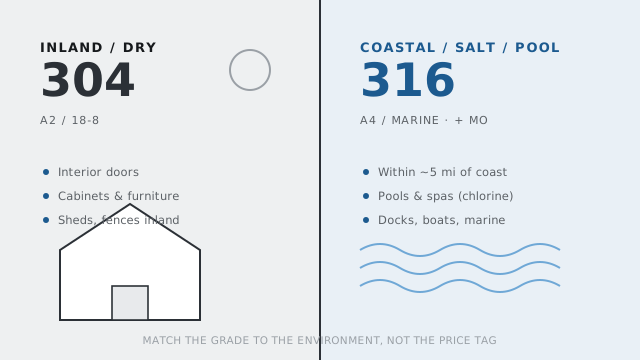
Accept nothing less than 316 (A4). "Marine" or "rust resistant" without a grade is a red flag near salt.
Matching 316 fasteners
Mixing grades or metals invites galvanic corrosion. Use 316 screws with 316 hinges.
Sealed or weld-on as needed
For decks and hatches, choose the mounting style that suits the substrate; cast 316 holds up well in splash zones.
Finish for tea-stain resistance
An electropolished or well-finished surface resists coastal tea staining better.
Marine hardware checklist
| Factor | Spec | Why |
|---|---|---|
| Grade | 316 / A4 minimum | Molybdenum resists chloride pitting. |
| Fasteners | Matching 316 screws | Avoids galvanic corrosion. |
| Dissimilar metals | Isolate or bed in sealant | Prevents galvanic and crevice corrosion. |
| Finish | Passivated / electropolished | Restores the passive film. |
| Maintenance | Fresh-water rinse | Removes the salt that drives staining. |
Our picks by use case
Hinge Outlet 316 Marine-Grade Stainless Door Hinge, NRP (3-pack)
Genuine 316 marine-grade stainless with a non-removable pin for outswing security. This is the grade to use within ~5 miles of salt water or anywhere chlorides are present. Pair with 316 screws to avoid galvanic corrosion.
Check price on Amazon →Affiliate link, we may earn a commission at no cost to you.XinSheng Full-316 Stainless Ball-Bearing Hinge, 4″ x 4″ (3-pack)
Another verified full-316 option, ball-bearing with an anti-tamper pin, built for coastal entry doors and gates in high-salt air. Confirm the listing still states 316 before buying.
Check price on Amazon →Affiliate link, we may earn a commission at no cost to you.Common mistakes to avoid
- Using 304 near salt to save money, it will pit.
- Mixing 316 hinges with carbon-steel or 304 fasteners (galvanic corrosion).
- Trapping salt in crevices without rinsing (crevice corrosion even on 316).
- Assuming shiny means marine; verify the 316 / A4 stamp.
- Skipping bedding compound on through-bolts, inviting crevice corrosion.
Frequently asked questions
Is 316 fully rust-proof?
No metal is. 316 strongly resists chloride pitting, but harsh salt can still surface-stain it. Rinse with fresh water and it cleans up, it won't structurally pit like 304.
Do I need 316 screws too?
Yes. Pairing 316 hinges with lesser fasteners creates a galvanic cell and the screws corrode first. Match the fastener grade to the hinge.
Is 316 enough for direct saltwater immersion?
For most above-water marine hardware, yes. For permanent immersion or aggressive splash zones, duplex grades resist even better, but that's rarely needed for hinges.
Do I really need 316 screws too?
Yes. Carbon-steel or even 304 screws in a 316 hinge can corrode and stain. Match the grade.