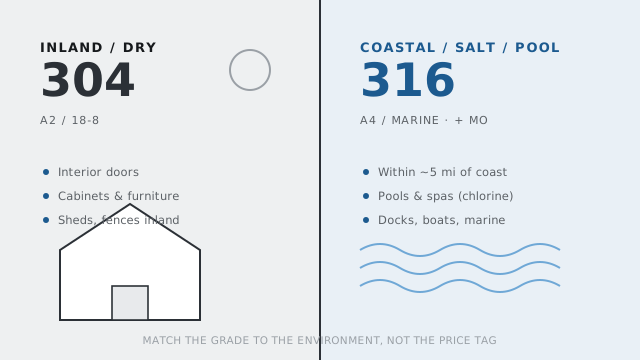
Bottom line: for hardware, "marine grade" means 316 stainless. It is the practical standard for boats, docks, and coastal builds because its molybdenum resists salt-driven pitting that destroys 304.
What "marine grade" means
There is no single legal definition, which is why the term gets overused. For stainless hardware it reliably means 316 (or 316L for welded parts). For aluminum, "marine grade" means different alloys entirely, don't confuse the two when reading listings.
Why 316 is the marine standard
Constant salt exposure is the harshest everyday corrosion test. 316's added molybdenum defends the passive layer against chlorides, so it resists pitting and tea staining where 304 gives up. Boat builders and dock hardware makers standardized on it for exactly this reason.
Buying marine hardware confidently
- Confirm the listing actually says 316 (or A4), not just "stainless" or "rust resistant."
- Match fasteners to the hinge grade to avoid galvanic corrosion.
- For welded assemblies, look for 316L.
- Plan for occasional freshwater rinsing, even 316 looks better with it.
When you need more than 316
In permanent splash zones or aggressive industrial-marine settings, duplex (2205) or super-austenitic grades resist salt even better. They cost more and are rarely necessary for hinges, but they exist if 316 isn't enough.
Frequently asked questions
Is 304 ever okay near the ocean?
For short-term or sheltered use, maybe. For anything you want to last, near salt the answer is 316.
How do I verify a hinge is really 316?
The grade should appear in the product spec or be stamped on the part. If the seller can't confirm it, assume it isn't 316.