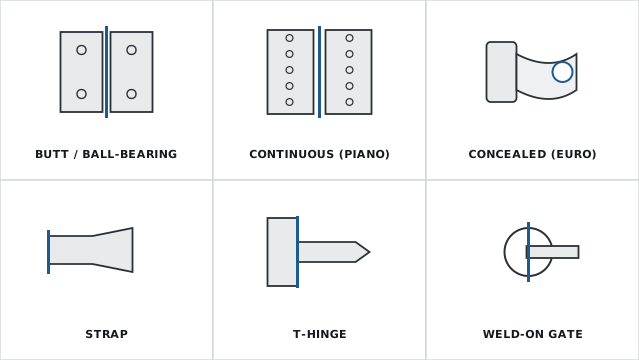
A ball-bearing hinge has tiny bearings set between its knuckles, so the door pivots on rolling steel instead of dragging metal on metal. That means far less friction, far less wear, and no squeal, which is why heavy, tall, and high-traffic doors should always use them.
How they differ from plain hinges
A plain (or plain-bearing) hinge simply has the two leaves' knuckles riding directly on the pin. It's fine for light interior doors. A ball-bearing hinge inserts hardened bearings between the knuckles so the load rolls instead of slides. Under weight and repeated use, that difference is enormous: plain hinges wear oval, drag, and squeak; ball-bearing hinges keep swinging smoothly for years.
When you actually need them
- Heavy doors, solid-core, exterior, or oversized slabs load each knuckle hard.
- High-traffic doors, entries and commercial openings that cycle thousands of times.
- Doors with closers, a spring or hydraulic closer adds constant force the bearings absorb.
- Anywhere squeal is unacceptable, bearings run quiet.
Grades and finishes
For commercial work, ball-bearing hinges are rated to ANSI/BHMA grades, Grade 1 for high-traffic and exterior, Grade 2 for moderate use. In stainless, they carry the same corrosion story as any hinge: 304 for dry and inland, 316 near salt or chlorine. Pair them with matching stainless screws so the fasteners don't rust out before the hinge does.
Frequently asked questions
Are ball-bearing hinges worth it for interior doors?
For light hollow-core interior doors, plain hinges are fine. Use ball-bearing for anything heavy, frequently used, or fitted with a door closer, that's where the reduced friction and wear pay off.
Do ball-bearing hinges need lubrication?
They're sealed and largely maintenance-free, but a little dry lube on the pin ends stops any squeak. Avoid heavy oils, which attract grit.