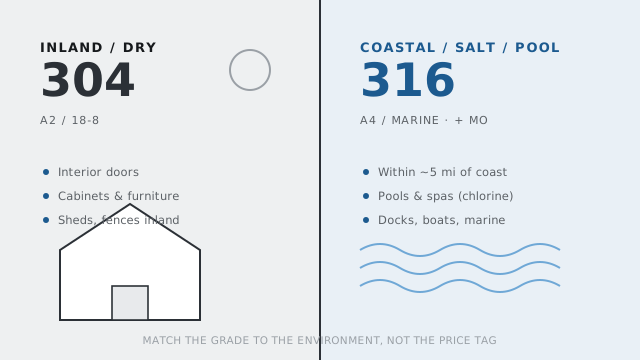
Stainless wins on strength and corrosion resistance; brass wins on looks and works fine indoors. For a hardworking or exterior door, choose stainless, 316 near salt. For a decorative interior door where appearance leads, solid brass is a fine, corrosion-resistant choice.
Strength
Stainless steel is significantly harder and stronger than brass, so it handles heavy doors and high traffic without wearing or deforming. Brass is softer; on a heavy or busy door its knuckles wear faster. For solid-core, exterior, or commercial doors, stainless is the durable pick.
Corrosion
Both resist corrosion far better than plated steel, but differently. Brass tarnishes (a surface patina many people like) and holds up well in normal conditions. Stainless resists rust through its passive layer; near salt, 316 stainless outperforms brass and everything else. In marine and coastal settings, 316 is the safer long-term choice.
Looks and cost
Brass is chosen for its warm gold appearance and classic, decorative feel, it's often the better match for traditional or high-end interior hardware. Stainless reads modern and industrial. On cost they're broadly comparable and both sit above plated steel; solid brass and quality stainless are both premium over budget hinges.
Quick verdict
- Exterior, marine, heavy, or high-traffic → stainless (316 near salt).
- Decorative interior, traditional look → solid brass.
- Don't mix metals carelessly, match fasteners to the hinge to avoid galvanic corrosion outdoors.
Frequently asked questions
Do brass hinges rust?
Brass contains no iron, so it doesn't rust, it tarnishes to a patina instead. It holds up well indoors and in mild conditions, but near salt, 316 stainless resists corrosion better.
Are brass hinges stronger than stainless?
No. Stainless steel is harder and stronger, which is why it's preferred for heavy and high-traffic doors. Brass is chosen for appearance and is best on lighter, decorative doors.