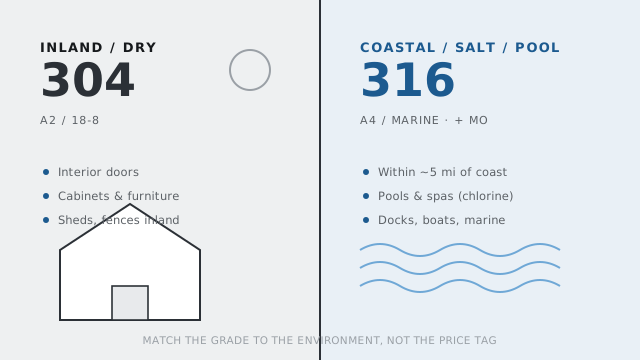
In short: 304 is an austenitic stainless steel containing about 18% chromium and 8% nickel, which is why it is nicknamed "18-8." It resists ordinary rust extremely well and is the right, cost-effective choice for indoor and inland outdoor hardware.
What it's made of
304's corrosion resistance comes from chromium. At roughly 18%, the chromium reacts with oxygen in the air to form an invisible, self-healing layer of chromium oxide on the surface, the "passive layer." Scratch it, and as long as oxygen is present, it re-forms. The ~8% nickel keeps the steel in its tough, formable austenitic structure.
What it resists, and what it doesn't
304 shrugs off moisture, humidity, and most household and industrial exposure. Its limit is chlorides: salt air, road salt, and pool chemicals can break down the passive layer and cause pitting or tea staining over time. That is the line where you step up to 316.
Where 304 hinges make sense
- Interior doors, cabinets, and furniture
- Outdoor hardware in dry or inland climates
- Gates and fences away from the coast
- Any job where you want stainless durability without the marine-grade premium
For the large majority of door and cabinet jobs in the U.S., 304 is the correct, economical answer.
Frequently asked questions
Is 304 stainless magnetic?
In its normal annealed state 304 is essentially non-magnetic, though cold working (like forming a hinge knuckle) can make it slightly magnetic. Magnetism is not a reliable way to identify the grade.
Will 304 rust outdoors?
In dry and inland climates it holds up for years. Near saltwater it will eventually tea-stain and pit, that is the job for 316.