What to look for
Load and cycle first
Match per-hinge or per-pair load ratings to the actual door or panel weight with margin, and choose ball-bearing or geared for high cycles.
Weld-on vs bolt-on
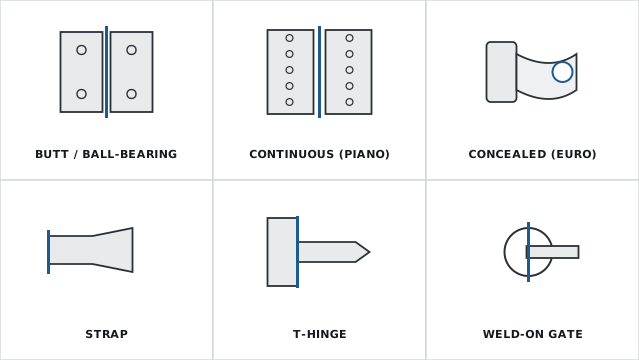
Weld-on barrel and bullet hinges suit steel fabrication; bolt-on for serviceable installs.
Grade for the atmosphere
Wash-down, food, and chemical plants want 316; general plant air is fine with 304.
Continuous for abuse
Full-height continuous hinges spread stress on heavy, frequently abused doors and panels.
Where to start shopping
Hyever 5″ Stainless Ball-Bearing Hinge, Heavy Duty (2-pack)
A 5″ 304 stainless ball-bearing hinge for heavy and solid-core doors. Step up to this size on heavy slabs and use at least one long screw per jamb hinge into the framing.
Check price on Amazon →Affiliate link, we may earn a commission at no cost to you.304 Stainless Continuous (Piano) Hinge, 1.5″ x 72″, Made in USA
The full-length 72″ version, for abuse-prone or full-height doors and panels where you want continuous support along the entire edge. Trim to fit.
Check price on Amazon →Affiliate link, we may earn a commission at no cost to you.Industrial hinge selection
| Need | Hinge | Notes |
|---|---|---|
| Heavy access panel | Weld-on barrel | Grease-able, rebuildable. |
| Full-height enclosure | Continuous (geared) | Load spread, no sag. |
| High-cycle door | Ball-bearing Grade 1 | Millions of cycles. |
| Washdown / food / marine | 316 | Corrosion and hygiene. |
Common mistakes to avoid
- Plain-bearing hinges on high-cycle equipment.
- Under-rated hinges on heavy panels.
- Wrong grade for washdown or chemical areas.
- Skipping serviceable (greasable or weld-on) hinges where rebuild matters.
Frequently asked questions
Weld-on vs bolt-on industrial hinges?
Weld-on give maximum strength and a clean line on steel; bolt-on allow field replacement. Choose by whether you need serviceability or ultimate rigidity.
When is 316 worth it industrially?
Washdown, food processing, chemical exposure, and coastal facilities, anywhere chlorides or aggressive cleaning attack 304.
304 or 316 for a factory?
General dry plant air: 304. Wash-down, food processing, or chemical exposure: 316.