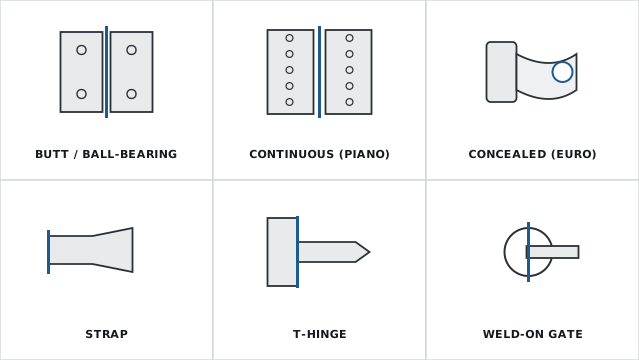
A barrel hinge is a simple, rugged cylinder-and-pin hinge, and the weld-on version is welded straight to a steel frame or gate rather than screwed. They trade the finesse of a butt hinge for raw strength and serviceability, the go-to for metal gates, heavy access panels, and industrial doors.
How they work
Two barrel halves share a pin; one half fixes to the frame, the other to the leaf. Weld-on barrels are welded to steel for a permanent, immovable mount. Many have a grease fitting (zerk) so the pin can be lubricated, and some are designed so the pin and bushing can be replaced when they wear, a real advantage on hard-working gates.
Where they're used
- Metal gates and fences, welded to the frame for maximum strength.
- Heavy access panels and enclosures, industrial equipment doors.
- Trailer and truck gates, abuse-tolerant and rebuildable.
- Anywhere screws would pull out, a weld beats fasteners under heavy shear.
Grade and maintenance
For outdoor and marine gates, stainless barrels resist corrosion, 304 inland, 316 near salt. Keep the pin greased where a fitting is provided, and on bolt-on versions use matching stainless hardware. Because they're serviceable, a good barrel hinge can outlast several sets of butt hinges on the same gate.
Frequently asked questions
Weld-on or bolt-on barrel hinges?
Weld-on give the strongest, most permanent mount on steel; bolt-on let you adjust or replace the hinge later. Choose weld-on for maximum strength, bolt-on for serviceability.
Can you use barrel hinges on a wooden gate?
Yes, bolt-on or lag-on barrel hinges work on wood, though strap and T-hinges spread load better across pickets. Weld-on versions are for steel frames only.