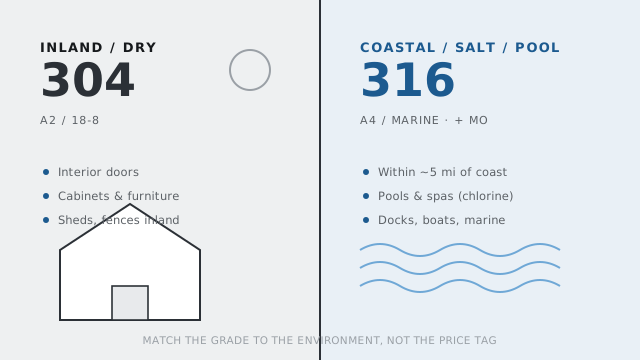
Two musts: self-closing, self-latching hardware (a code requirement in most areas) and chlorine-resistant 316 stainless. Always confirm your local pool-barrier code before buying.
What to look for
Self-closing & self-latching
Most pool codes require the gate to close and latch on its own, with the latch at a specified height. This is a safety and legal requirement.
Chlorine resistance
Pool chemistry is a chloride environment, treat it like the coast and use 316.
Adjustable tension
Self-closing hinges with adjustable tension let you tune the close speed.
Verify local code
Pool-barrier rules vary by jurisdiction. Confirm yours before finalizing hardware.
Where to start shopping
D&D Technologies TruClose Heavy-Duty Self-Closing Gate Hinge
The standard self-closing hinge for pool and child-safety gates, adjustable closing tension, polymer body with stainless internal spring, won't rust, sag, or stain. Pair with a self-latching latch and confirm your local pool-barrier code.
Check price on Amazon →Affiliate link, we may earn a commission at no cost to you.Pool gate requirements
| Requirement | Spec | Why |
|---|---|---|
| Grade | 316 | Chlorine and splash. |
| Self-closing | Spring / hydraulic hinge | Required by most codes. |
| Self-latching | Paired latch | Keeps the gate secured. |
| Adjustable tension | Yes | Reliable closing over time. |
| Fasteners | 316 | Avoids galvanic corrosion and rust. |
Common mistakes to avoid
- Using 304 around chlorinated water.
- Non-self-closing hinges where code requires self-close and latch.
- Setting spring tension too weak to latch reliably.
- Mixed-metal fasteners.
Frequently asked questions
Do pool gates legally need self-closing hinges?
Most jurisdictions require pool gates to self-close and self-latch. Check your local code, but spring or hydraulic self-closing hinges plus a latch are the norm.
Why 316 for pool gates?
Chlorine and pool chemicals are aggressive chlorides. 316 resists them far better than 304, which will stain and pit around a pool.
Do pool gates legally need self-closing hinges?
In most jurisdictions, yes, self-closing and self-latching are standard pool-barrier requirements. Check your local code for specifics.
Why 316 for a pool gate?
Chlorine is a chloride, like salt. 304 will corrode around a pool; 316 holds up.